Last updated:
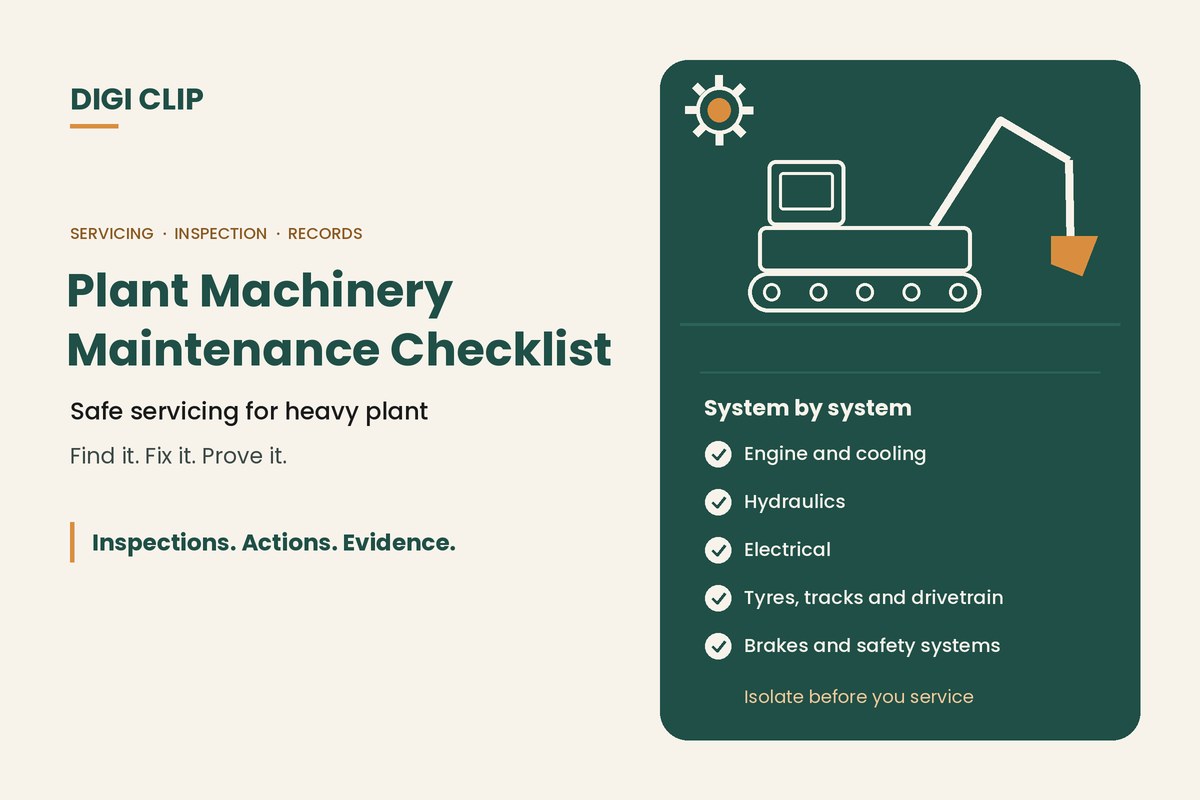
A plant machinery maintenance checklist is a structured list of the inspections and servicing tasks for plant such as excavators, loaders, rollers and generators. It covers the engine, hydraulics, electrics, drivetrain, brakes and safety systems, so wear and defects are found early and the machine stays safe to operate.
Plant Machinery Maintenance Checklist: Safe Servicing for Heavy Plant
Good maintenance keeps plant working and keeps operators safe. Poor maintenance shows up as breakdowns, hydraulic failures, brake problems and, at worst, serious incidents. This guide covers what WHS law expects, how to make maintenance work safe, a system-by-system maintenance checklist, a sample schedule, and the records that show the work was done.
Key points
- Plant must be maintained and inspected by a competent person, following the manufacturer’s recommendations.
- Make maintenance safe first: isolate energy, release stored pressure and support raised attachments.
- Work through each system: engine, hydraulics, electrics, drivetrain, brakes and safety systems.
- Combine operator daily checks with scheduled servicing and periodic inspections.
- Test and sign plant back into service after maintenance, and keep a record for each machine.
What WHS law expects
Under the model WHS Regulations, a business must make sure plant is maintained, inspected and, where needed, tested by a competent person. This should follow the manufacturer’s recommendations or, if there are none, the recommendations of a competent person. The Code of Practice for managing the risks of plant also recommends keeping an up-to-date register of plant that needs regular inspection, and says plant with damage that poses a risk should be withdrawn from service until the risk is controlled.
Maintenance itself is one of the riskier jobs around plant, so the Code also expects the risks of maintenance work to be managed, including isolating the plant and controlling stored energy.
Before maintenance starts
- Plan the job. Check the manufacturer’s service instructions, the parts and tools needed, and who is competent to do the work.
- Park and secure the machine. Park on firm, level ground away from traffic, lower attachments to the ground and chock wheels or tracks.
- Isolate energy sources. Switch off, remove the key, isolate the battery or power supply, and apply your lockout and tags.
- Release stored energy. Relieve hydraulic and air pressure as the manufacturer specifies, and support any raised component that could drop.
- Let it cool. Allow hot engines, exhausts, hydraulic oil and coolant to cool before working on them.
- Set up safe access. Use proper platforms or steps rather than climbing on the machine, and wear the PPE your procedure specifies.
For more on isolation, see our guide to lock out, tag out.
Plant machinery maintenance checklist
Use the manufacturer’s service schedule as your baseline, and add items based on how and where the machine works.
Engine and cooling
- Engine oil and filter changed at the specified interval
- Coolant level and condition, radiator fins clean, hoses and clamps secure
- Drive belts checked for wear and tension
- Air filter and pre-cleaner cleaned or replaced, especially in dusty conditions
- Fuel filters and water separator serviced, and no fuel leaks
Hydraulics
- Hydraulic oil level and condition, filters changed on schedule
- Hoses and fittings checked for leaks, chafing, cracking and bulging
- Cylinders, rods and seals undamaged
- Quick hitch and locking system working as designed
Electrical
- Battery secure, terminals clean and tight
- Wiring and connectors undamaged and protected from rubbing
- Lights, beacons, horn, reversing alarm and cameras working
- Gauges and warning lights working, and any fault codes investigated
Drivetrain, tyres and tracks
- Transmission and final drive oil levels
- Tyres checked for pressure, wear and damage, and wheel nuts torqued
- Tracks, rollers, idlers and sprockets checked for wear, and track tension adjusted
- Pins and bushes greased and checked for excessive play
Brakes and steering
- Service and park brakes tested and adjusted
- Steering components checked for wear and play
Structure and safety systems
- ROPS and FOPS undamaged, with no cracks, unauthorised modifications or missing bolts
- Seatbelt, guards, interlocks and emergency stops working
- Steps, handrails and grab handles secure
- Frame, boom and attachments checked for cracks and wear
- Fire extinguisher serviced and fire suppression system checked, if fitted
Sample maintenance schedule
Intervals vary by machine and working conditions, so always follow the manufacturer’s recommendations. A typical structure looks like this:
| Frequency | Who | Typical tasks |
|---|---|---|
| Each shift | Operator | Pre-use check: walk-around, fluids, leaks, safety devices, controls |
| Weekly | Operator or fitter | Greasing, tyre pressures or track tension, air filter check, battery |
| Scheduled service (by hours) | Competent technician | Oil and filter changes, hydraulic and fuel filters, inspection of wear parts |
| Periodic inspection | Competent person | Structural, brake and safety system inspection, any testing the manufacturer specifies |
Operator checks catch problems between services. See our guide to daily plant equipment safety checks and our preventative maintenance guide.
Returning plant to service
- Remove tools, rags and parts from the machine and check nothing is left in moving parts.
- Refit all guards and covers.
- Remove locks and tags following your isolation procedure.
- Start and test the machine, including brakes, steering, hydraulics and safety devices.
- Record what was done, parts fitted and who signed the machine back into service.
Maintenance records
For each machine, keep its service history, inspections by competent persons, defects and the repairs that fixed them, and operator checks. Good records help you plan services, spot recurring faults, show that plant risks are being managed, and answer questions quickly after an incident.
With DIGI CLIP, operators and fitters complete checks and service checklists on a phone or tablet, add photos and signatures, and work without coverage. Failed items flow into the Action Log, where they are assigned, tracked and closed out with evidence. Comparing tools? See our DIGI CLIP vs Mitti comparison for plant machinery checks.
Illustrative scenario: a chafing hydraulic hose
During a 250-hour service on a loader, a fitter notices a hydraulic hose rubbing against the frame. It isn’t leaking yet, so he records it in the DIGI CLIP service checklist with a photo, fits a protective sleeve and clamp, and adds a follow-up action to replace the hose at the next service. The plant manager can see the finding, the interim fix and the planned replacement in one place.
This scenario is illustrative. It shows how a business could use DIGI CLIP and is not an account of a specific customer.
Need a starting template? See our equipment inspection checklist template.
For what to look for when comparing tools, see our inspection checklist app guide. For excavators, loaders and other earthmoving plant, see our heavy equipment inspection app.
Keep Every Service on Record
Put maintenance checklists on your fitters’ phones and see defects land in the Action Log, ready to fix and prove.
Start Your 14-Day Free TrialNo credit card required. Set up in minutes.
Frequently asked questions
What is a plant machinery maintenance checklist?
A plant machinery maintenance checklist is a structured list of the inspections and servicing tasks for plant such as excavators, loaders, rollers and generators. It covers the engine, hydraulics, electrics, drivetrain, brakes and safety systems, so wear and defects are found early and the machine stays safe to operate.
How often should plant be serviced?
Follow the manufacturer’s recommendations, which are usually based on operating hours. If there are none, follow the recommendations of a competent person. Harsh conditions, such as dust or heavy loads, may call for shorter intervals.
Who can carry out plant maintenance?
Maintenance, inspection and testing should be carried out by a competent person, meaning someone with the knowledge, skills and experience for that task and machine. Operators can do daily checks and simple tasks such as greasing if they are trained to.
What should be done before maintenance starts?
Park on level ground, lower attachments, isolate energy sources with locks and tags, release stored hydraulic and air pressure, support any raised components, let hot parts cool and set up safe access.
What maintenance records should we keep?
Keep a service history for each machine, inspections by competent persons, defects and the repairs that fixed them, and operator checks. An up-to-date register of plant that needs regular inspection is also recommended.
Can maintenance checklists be completed on a phone?
Yes. In DIGI CLIP, fitters and operators complete checklists on a phone or tablet, even without coverage, attach photos and signatures, and failed items flow to the Action Log.
About DIGI CLIP Mobile Forms
DIGI CLIP is an Australian-built mobile checklist and inspection platform. Inspections. Actions. Evidence. Teams complete checks on a phone or tablet, turn defects into assigned actions, and keep the proof that each one was fixed and verified.
See how it works for manufacturing and maintenance teams.