Last updated:
A residential fire safety inspection is a check of a house, unit or apartment building for fire hazards and for the condition of its fire safety equipment, such as smoke alarms, exits and, in larger buildings, fire protection systems. For property managers, strata managers and housing providers, it is also a record that the checks were done.
Residential Fire Safety Inspections: A Guide for Property and Housing Managers
Most residential fires start with something ordinary: cooking left unattended, an overloaded power board, a heater too close to curtains. Working smoke alarms and clear exits give occupants time to get out. For businesses that manage residential properties, regular fire safety inspections are how you find problems early and show that you met your obligations. This guide covers what to check, how often, and how to keep records that stand up.
Key points
- Smoke alarm rules for residential properties differ between states and territories.
- Rental providers generally have specific smoke alarm duties. Check the rules where your properties are.
- Apartment buildings also have essential fire safety measures that must be maintained.
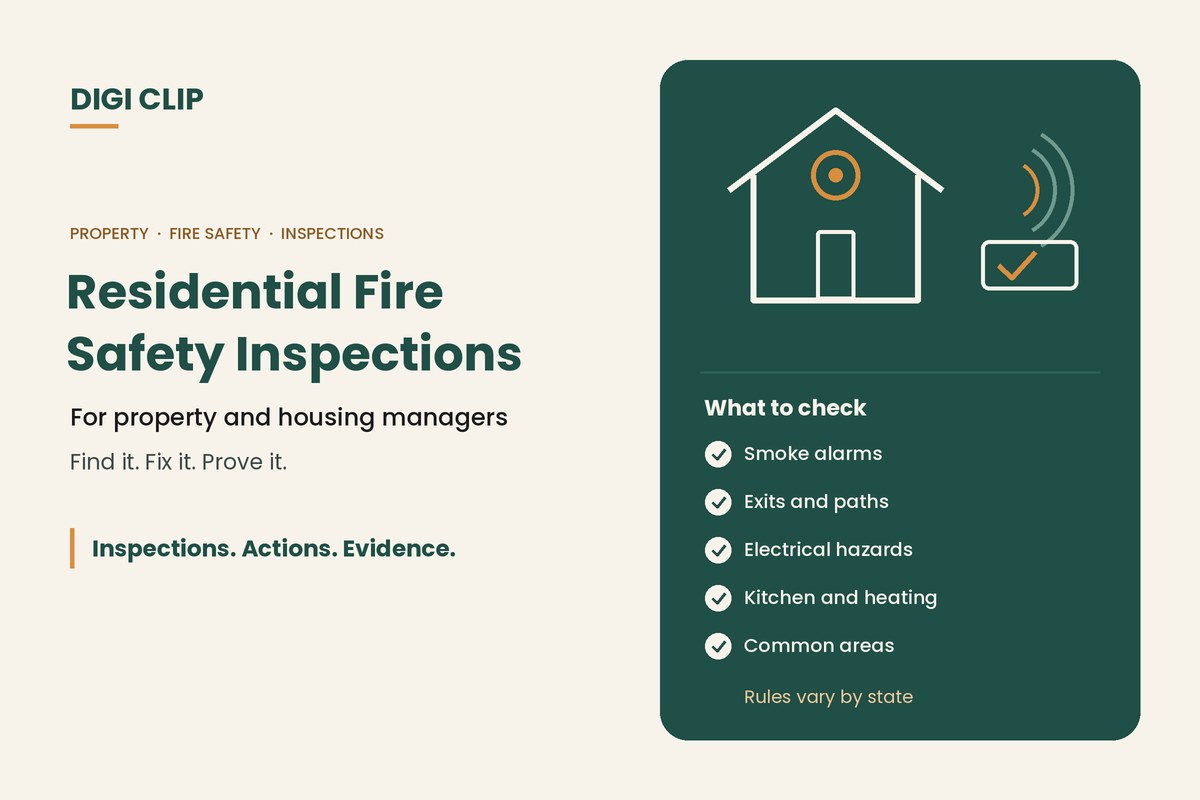
- Inspections should cover alarms, exits, electrical hazards, heating and cooking areas.
- Records should show what was checked, what was found and what was fixed.
Rules and responsibilities
Smoke alarm requirements are set by each state and territory. They cover the type of alarm, where alarms must be installed, whether they must be interconnected, how they are powered, and how often they must be tested or replaced. Rental properties usually have extra duties for the rental provider or agent, such as checks at the start of each tenancy. Smoke alarms should comply with the Australian Standard AS 3786.
Apartment and other multi-unit buildings also have essential fire safety measures, such as fire doors, exit signs, emergency lighting, sprinklers and fire detection systems. These must be maintained, commonly in line with AS 1851, and several states require annual statements or reports. Check the current rules with your state fire service, building regulator or tenancy authority.
Residential fire safety checklist
| Area | What to check |
|---|---|
| Smoke alarms | Installed where required, tested and working, within their replacement date, and the right type for your state |
| Exits | Doors open easily from inside, paths clear, security screens and deadlocks can be opened without delay |
| Electrical | No damaged cords, overloaded power boards or scorch marks, and safety switches tested |
| Kitchen | Rangehood and filters clean, nothing flammable near cooktops, fire blanket if provided |
| Heating and cooling | Heaters clear of curtains and furniture, flues and chimneys in good condition, dryer lint filters clean |
| Storage | Fuels, gas bottles and chemicals stored safely, no rubbish build-up in garages or under stairs |
| Common areas | Fire doors closing and latching, exit signs and emergency lighting working, corridors clear |
| Fire equipment | Extinguishers, hose reels and hydrants accessible and within service date, where fitted |
How often to inspect
- Smoke alarms: as required in your state, and commonly at the start of each tenancy for rentals.
- Routine property inspections: add fire safety items to each routine inspection.
- Common areas: regular walk-throughs by building or facility managers, in addition to contractor servicing.
- Fire protection systems: servicing by qualified contractors on the schedule set by the relevant standard.
- After changes: following renovations, repairs, damage or a change of occupant.
Running residential inspections
- Confirm the rules. Check the smoke alarm and building requirements for each state you manage properties in.
- Build a standard checklist. Include alarms, exits, electrical, heating, cooking, storage and common areas.
- Schedule the checks. Link them to tenancy starts, routine inspections and building walk-throughs.
- Record the evidence. Take photos, note alarm dates and record who inspected and when.
- Act on findings. Assign repairs to a tradesperson or contractor and track them to completion.
- Keep the records. Store reports where you can find them for owners, tenants, insurers or regulators.
Residential inspections with DIGI CLIP
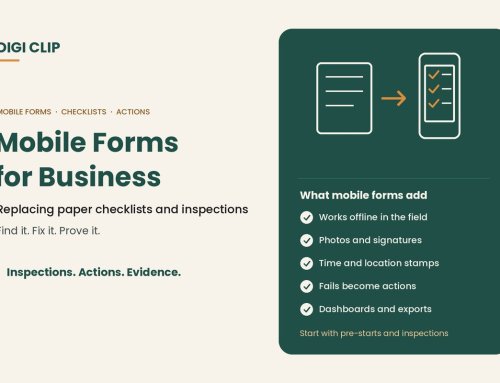
With DIGI CLIP, property and facility managers complete fire safety inspections on a phone or tablet, with photos and a signature. Each form is location- and time-stamped. A failed item, such as an expired smoke alarm or a blocked exit, creates an action in the Action Log that is assigned and closed out with evidence. Recurring checks send reminders when they’re due, and reports export to PDF or Excel. See also our fire safety inspection checklist for workplaces.
Illustrative scenario: an alarm past its date
A property manager completes a start-of-tenancy inspection in DIGI CLIP and finds a hallway smoke alarm past its replacement date. The item creates an action for the maintenance coordinator, an electrician replaces the alarm before the tenant moves in, and the action is closed out with a photo of the new alarm and its date.
This scenario is illustrative. It shows how a business could use DIGI CLIP and is not an account of a specific customer.
Keep Fire Safety Checks on Record
Put residential fire safety inspections on your team’s phones and see issues land in the Action Log, ready to fix and prove.
Start Your 14-Day Free TrialNo credit card required. Set up in minutes.
Frequently asked questions
What is a residential fire safety inspection?
A check of a house, unit or apartment building for fire hazards and for the condition of fire safety equipment such as smoke alarms, exits and fire protection systems.
Who is responsible for smoke alarms in rental properties?
Rental providers generally have specific smoke alarm duties, which differ between states and territories. Check the tenancy and fire service rules where the property is located.
How often should smoke alarms be checked?
As required by the rules in your state, commonly including a check at the start of each tenancy for rentals, and in line with the manufacturer’s instructions.
What should a residential fire safety checklist include?
Smoke alarms, exits, electrical hazards, kitchen and heating areas, storage of fuels and chemicals, common areas and any fire equipment fitted.
What are essential fire safety measures?
Fire safety equipment and features in buildings, such as fire doors, exit signs, emergency lighting, sprinklers and detection systems, which must be maintained and, in several states, reported on annually.
Can residential inspections be recorded on a phone?
Yes. In DIGI CLIP, inspections are completed on a phone or tablet with photos, and failed items become actions in the Action Log.
About DIGI CLIP Mobile Forms
DIGI CLIP is an Australian-built mobile checklist and inspection platform. Inspections. Actions. Evidence. Teams complete checks on a phone or tablet, turn defects into assigned actions, and keep the proof that each one was fixed and verified.
See our Form Library for ready-made templates.