
A truck safety procedures checklist is a structured inspection process completed before and during heavy vehicle operations to verify roadworthiness, support NHVR-aligned compliance, and improve driver safety while reducing mechanical failures and liability exposure.

Truck Safety Procedures Checklist: Reduce Risk & Ensure NHVR Compliance
A properly implemented truck safety procedures checklist is one of the most effective ways to reduce heavy vehicle incidents, protect drivers, and meet regulatory obligations under Australia’s Heavy Vehicle National Law (HVNL).
Heavy vehicles are involved in around 18% of road crash deaths in Australia, which is why consistent, documented checks matter. In practice, your truck safety procedures checklist becomes your documented heavy vehicle daily safety check, showing that roadworthiness is verified before each shift. For NHVR guidance and operator responsibilities, refer to the National Heavy Vehicle Regulator (NHVR).
Why a Truck Safety Procedures Checklist Matters
- Ensures vehicle roadworthiness before entering public roads
- Reduces breakdowns and mechanical failures
- Supports Chain of Responsibility compliance
- Protects directors and managers from liability exposure
- Creates documented audit trails
Whether you call it a truck safety inspection checklist or a pre-start safety checklist for trucks, the outcome is the same: a repeatable, auditable process that proves checks were completed and issues were escalated.
If you’re refining your process, you may also want to review our detailed guide on truck pre-start checklist items, which breaks down the critical inspection points drivers should verify before every shift.
What a Truck Safety Procedures Checklist Should Include
| Inspection Area | What to Check |
|---|---|
| Brakes | Air pressure, warning systems, brake response |
| Tyres | Tread depth, pressure, visible damage |
| Lights | Headlights, brake lights, indicators |
| Steering & Suspension | Free play, unusual noise, stability |
| Load Restraint | Chains, straps, anchor points |
| Fluid Levels | Engine oil, coolant, hydraulic fluids |
| Safety Equipment | Fire extinguisher, triangles, PPE |
Each completed truck safety procedures checklist should include:
- Driver declaration
- Date and time stamp
- Asset ID
- Photo evidence where defects are identified
This is what turns a “quick look” into a defensible heavy vehicle daily safety check you can rely on during audits, investigations, or customer compliance reviews.
For broader context, compare your truck safety procedures checklist with our heavy vehicle daily checks guide, which outlines practical compliance expectations aligned with NHVR roadworthiness obligations.
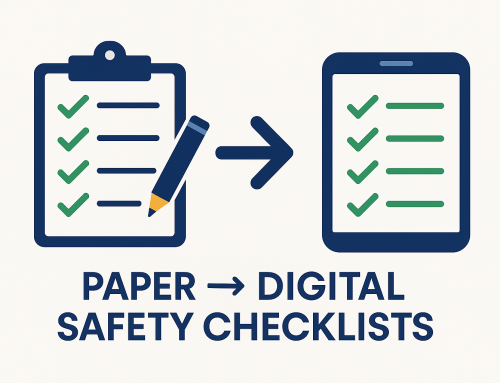
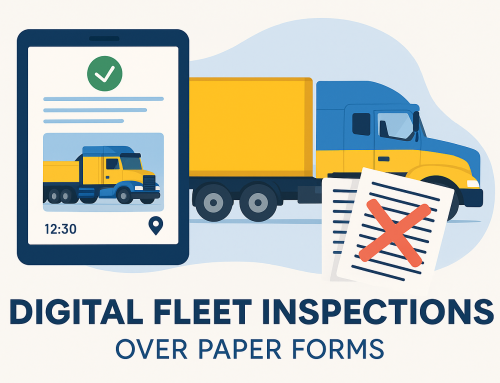
Digital vs Paper Truck Safety Procedures Checklists
Paper systems create risk:
- Lost forms
- Illegible handwriting
- No real-time defect escalation
- No centralised reporting
Digital checklists provide:
- Real-time cloud reporting
- Automated defect notifications
- Photo capture for evidence
- Instant Action Register integration
- Complete audit trail
If your organisation still relies on spreadsheets, our guide on migrating from Excel to digital checklists explains how to transition safely without losing historical inspection data.
Digital workflows also make it easier to enforce a consistent heavy vehicle daily safety check across depots, routes and supervisors, with reporting that managers can action immediately.
Transport Case Study
A regional transport company implemented a digital truck safety procedures checklist across 42 vehicles.
Within 6 months:
- 42% reduction in repeat mechanical defects
- 100% daily pre-start completion compliance
- 28% faster defect close-out time
- Improved NHVR audit confidence
Managers gained visibility across all assets in real time, and drivers had a clearer process for reporting issues during the pre-start safety checklist for trucks.
For mixed fleets operating both heavy and light vehicles, it’s equally important to standardise inspection processes across all assets. See our light vehicle pre-start checklist guide to ensure consistent safety documentation across your entire fleet.
How to Implement a Truck Safety Procedures Checklist
- Define inspection categories aligned to NHVR daily heavy-vehicle checks and vehicle standards guidance.
- Standardise response options (OK / Not OK / N/A)
- Require photo evidence for defects
- Automate escalation through an Action Register
- Train drivers on consistent completion
You can configure these inspection categories, response options and escalation rules in DIGI CLIP so every truck safety procedures checklist feeds directly into your Action Register.
Ready to Simplify Compliance?
Replace paper forms with mobile checklists, automated defect tracking and real-time reporting.
Supported 14-day free trial. No credit card required. Set up in minutes.
About DIGI CLIP Mobile Forms
DIGI CLIP is a mobile checklist and inspection app designed for transport, warehousing, agriculture and construction industries. It replaces paper-based inspections with real-time digital reporting.
Built-in photo capture, geo-time stamping and an integrated Action Register ensure defects are tracked to completion.
Frequently Asked Questions
What is a truck safety procedures checklist?
A truck safety procedures checklist is a structured inspection completed before operating a heavy vehicle to verify safety and roadworthiness, support compliance, and reduce the risk of mechanical failure.
Is a truck safety procedures checklist required under NHVR?
While it may not be mandated by name, operators must ensure vehicles are roadworthy under HVNL, making documented daily checks essential evidence of compliance.
How often should a truck safety procedures checklist be completed?
Daily, before the vehicle enters service (and again if conditions change, defects are identified, or the vehicle is swapped during a shift).
Can truck safety procedures checklists be digital?
Yes. Digital checklists improve audit trails, speed up defect escalation, enable photo evidence, and support centralised reporting across fleets.
Conclusion
A properly implemented truck safety procedures checklist reduces risk, improves driver safety, and strengthens compliance under NHVR and HVNL obligations. Digital systems elevate this further by providing real-time oversight, defect tracking and audit-ready evidence.
If you’re ready to modernise your transport compliance systems, DIGI CLIP provides a supported 14-day free trial so you can implement your truck safety inspection checklist and documented heavy vehicle daily safety check process immediately.

Useful Resources:





Leave A Comment