
A heavy vehicle daily check is a pre-operation inspection completed by a driver to verify brakes, tyres, steering, lights and load restraint are safe, roadworthy and compliant with NHVR guidance and HVNL Chain of Responsibility.
Heavy Vehicle Daily Checks: Legal Requirements, NHVR Guidance & Audit-Ready Compliance
Heavy vehicle daily checks are not optional. They’re a practical control that helps prevent defects, roadside notices, and avoidable incidents. Australia’s road safety data also shows the stakes: around 18% of road crash deaths involve a heavy vehicle. That’s why regulators and safety frameworks expect consistent checks, defect actioning, and clear records you can produce on demand.
In this guide, you’ll learn what the NHVR expects, what to include in a heavy vehicle daily check checklist, how to document defects, and how to make your daily check process fast, consistent, and audit-ready using digital checklists.
Authority references: NHVR – Creating heavy vehicle daily checks (PDF), NHVR – Heavy Vehicle National Law (HVNL), Australian Government – Heavy vehicle safety fact sheet.

Quick Highlights
- Daily heavy vehicle checks help meet HVNL Chain of Responsibility expectations and NHVR daily check guidance.
- Focus on safety-critical components: brakes, tyres, lights, steering, couplings and load restraint.
- Document defects and actions taken so records are audit-ready (not just “tick and flick”).
- Digital inspections reduce paperwork errors and speed up defect reporting and close-out.
Ready to Simplify Compliance?
Replace paper forms with mobile heavy vehicle daily checks, automated defect tracking and real-time reporting.
Supported 14-day free trial. No credit card required. Set up in minutes.
Are Heavy Vehicle Daily Checks Legally Required?
In practice, yes — daily checks are an expected control under the Heavy Vehicle National Law (HVNL) and are reinforced by NHVR guidance, accreditation expectations (including maintenance standards), and Chain of Responsibility (CoR) duties. The NHVR also publishes a dedicated guide for building a daily check process you can tailor to your fleet.
If you operate under an accreditation scheme such as NHVAS Maintenance Management, daily heavy vehicle checks are typically treated as a non-negotiable requirement when vehicles are in use — and your evidence (records + defect close-out) matters.
What to Include in a Heavy Vehicle Daily Check Checklist
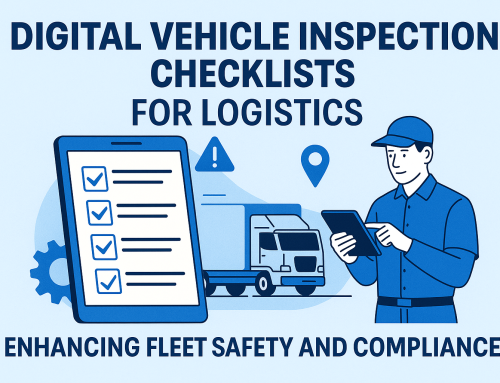
A strong heavy vehicle daily check checklist blends a quick walk-around with functional checks. Start with the NHVR daily check guide, then tailor to vehicle type (rigid, prime mover, B-double, road train), operating conditions, and manufacturer requirements.
Daily inspection areas (NHVR-aligned)
- Brakes & air systems: warning indicators, air pressure build-up, audible leaks, park brake holding.
- Wheels, tyres & hubs: tread, damage, pressure, wheel security, hub seal leaks.
- Lights, reflectors & indicators: all operational, lenses intact, clearance lights working.
- Steering & suspension: play, unusual movement/noise, visible damage, leaks (where applicable).
- Windscreen, mirrors & wipers: visibility, cracks in primary vision area, washer/wiper function.
- Couplings & combinations: fifth wheel/ballrace secure, pins/locks engaged, safety chains, tug test.
- Structure & body condition: chassis/frame condition, panels secure, no loose items, no critical damage.
- Fluid leaks: oil, fuel, coolant, brake fluid, hydraulic leaks (where applicable).
- Load restraint: restraints present, undamaged, fit for purpose, load secure before departure.
- Safety equipment: fire extinguisher, triangles, PPE, first aid (as applicable).
At-a-glance checklist table
| Inspection Area | Critical Items to Verify | Common Defects to Capture |
|---|---|---|
| Brakes & Air | Warning indicators/gauges, park brake holding, air build-up, audible leaks | Air leak, low pressure, warning light, poor brake response |
| Wheels & Tyres | Tread/condition, inflation, wheel nuts, hub leaks | Cut/bulge, low tread, loose nuts, oil on inside rim |
| Lights | Headlights, brake lights, indicators, clearance lights, reflectors | Blown globe/LED, cracked lens, intermittent indicator |
| Couplings | Locks engaged, pins secure, safety chains, tug test completed | Wear, damage, missing pin, slack, unsafe connection |
| Leaks & Structure | No critical leaks, panels secure, chassis/frame OK | Fuel/oil leak, loose panel, cracked mount |
| Load Restraint | Restraints present and fit, load stable, anchors OK | Frayed strap, missing gate pin, damaged chain/binder |
Tip: Keep the daily heavy vehicle check consistent across your fleet, but add optional fields for specialised equipment (tail lifts, cranes, refrigeration, dangerous goods fittings, etc.).
Need a Heavy Vehicle Daily Check Template?
Use DIGI CLIP’s truck safety inspection checklist as the baseline for your daily heavy vehicle checks.
Chain of Responsibility Duties
Chain of Responsibility (CoR) means safety is a shared obligation. Drivers, operators, schedulers, consigners, consignees and loading parties all have duties to ensure transport activities are safe — so far as is reasonably practicable. A documented daily heavy vehicle check process is one of the clearest ways to show you’ve taken reasonable steps to prevent an unsafe vehicle being used.
Where daily checks reduce CoR risk
- Scheduling pressure: confirms defects are captured even when turnaround is tight.
- Load restraint: provides evidence the load was checked and secured before leaving site.
- Maintenance accountability: creates a consistent defect pipeline to action and close-out.
- Audit readiness: produces time-stamped records you can retrieve instantly.
Documentation and Record-Keeping
It’s not enough to “do the check” — you need records that are clear, complete and retrievable. For work health and safety context, regulators also treat vehicles used for work as a workplace where risks must be managed, including through inspection and maintenance systems.
Your daily check record should capture
- Date and time the inspection was completed
- Driver / inspector name
- Vehicle ID (rego, fleet number, Asset ID)
- Checklist results (pass/fail/NA per item)
- Defects (what was found, severity)
- Action taken (isolated, repaired, escalated)
- Evidence (photos, notes, sign-off)
What to Do When a Defect Is Found
When a defect is identified, the safest approach is a standard escalation pathway — especially for safety-critical items. Use simple categories so drivers don’t have to guess.
Suggested defect workflow
- Stop and make safe (isolate the vehicle if required).
- Capture evidence (photo + short description).
- Notify the right person (maintenance/fleet manager).
- Create an action with owner and due date.
- Verify close-out before the vehicle returns to service.
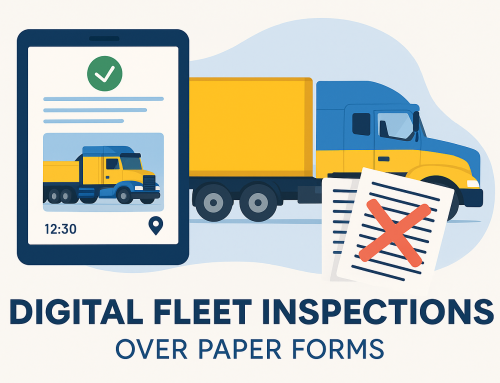
This is where digital workflows win: instead of a paper form sitting in a clipboard, the defect becomes a tracked action with evidence and accountability.
Digital vs Paper vs Excel
Paper and spreadsheets can “record” a daily check — but they struggle to prove compliance under pressure. Most importantly, they don’t reliably manage defects from identification through to closure.
| Approach | What Works | Where It Fails (Compliance Risk) |
|---|---|---|
| Paper checklist | Simple, familiar | Lost forms, backfilled checks, slow defect escalation, poor audit retrieval |
| Excel / spreadsheets | Easy to create, can aggregate | No robust audit trail, version control issues, defect workflow missing, high human-error exposure |
| Generic form app | Digital capture and basic storage | Often no integrated action register, limited compliance reporting, weak close-out governance |
| DIGI CLIP Mobile Forms | Digital checks + evidence + action tracking | Designed to reduce “tick and flick” with photo capture, timestamps and tracked close-out |
How to Implement Daily Heavy Vehicle Checks
Use this process to roll out a truck safety inspection checklist that drivers will actually complete — and that managers can defend during audits.
Step-by-step
- Define inspection categories aligned to NHVR daily heavy-vehicle checks and vehicle standards guidance.
- Standardise the checklist (same core items across the fleet; optional sections by vehicle type).
- Set defect rules (what stops the vehicle, who gets notified, and how quickly defects must be actioned).
- Train drivers on what “pass” looks like and when to escalate.
- Digitise the workflow (mobile form + photo evidence + automatic action tracking).
- Review weekly (missed checks, recurring defects, overdue actions, trend reporting).
Case Study: From Paper to Audit-Ready Digital Daily Checks
A multi-site transport operator (30+ vehicles) moved from paper daily checks to digital heavy vehicle daily checks using DIGI CLIP. The goal was simple: reduce missed defects, speed up maintenance actioning, and improve audit readiness.
Outcomes (first 60 days)
- 41% reduction in missed or incomplete daily checks (improved driver consistency)
- 2× faster defect notification to maintenance (no paper handover delays)
- Audit retrieval time cut from hours to minutes (search + export)
“We use DIGI CLIP daily in our business. It’s such a great and easy-to-navigate system for keeping our paperwork fully digital!”
— Mellisa Gallop, GTS Trawlers
Related Heavy Vehicle Compliance Resources
About DIGI CLIP Mobile Forms
DIGI CLIP is a mobile checklist and inspection app that simplifies safety, compliance, and operational reporting. Designed for transport, warehousing, agriculture and construction, DIGI CLIP replaces paper forms with real-time digital checklists.
Built-in photo capture, geo-time stamping, automated alerts, and an Action Register help teams capture defects and prove close-out — not just “tick the box”.
Frequently Asked Questions
Are heavy vehicle daily checks mandatory in Australia?
In practice, yes. Daily checks are an expected control under the HVNL and NHVR guidance, and they’re commonly required in heavy vehicle maintenance and accreditation programs. The safest approach is to complete and document a daily check whenever a heavy vehicle is in use.
What should a heavy vehicle daily check checklist include?
At minimum: brakes/air, wheels and tyres, lights and indicators, steering/suspension, mirrors/windscreen/wipers, couplings (where applicable), leaks, structure/body condition and load restraint. Use the NHVR daily checks guide as a baseline, then tailor to your vehicles and operating conditions.
Who is responsible for daily checks under Chain of Responsibility?
Responsibility extends beyond the driver. Operators and other parties in the supply chain (such as schedulers and loading parties) have duties to ensure transport activities are safe — so far as is reasonably practicable. A documented daily check system is a key control for demonstrating reasonable steps.
What happens if a defect is found during a daily check?
The defect should be recorded, evidence captured, and the issue escalated according to your defect rules. Safety-critical defects should trigger isolation of the vehicle until repaired and verified. In DIGI CLIP, defects can be logged and tracked through an Action Register until closed out.
How long must heavy vehicle daily check records be retained?
Retention time can vary by program and organisational requirements. Many compliance contexts require multi-year retention and fast retrieval for audits. A good rule is to keep daily check records for at least three years and ensure they are searchable and exportable.
Do digital heavy vehicle daily checks work offline?
Yes. DIGI CLIP supports offline completion so drivers can perform daily checks in remote areas. Submissions sync when connectivity is restored.
Conclusion
Heavy vehicle daily checks are one of the simplest, highest-impact controls for reducing defects, protecting drivers, and demonstrating compliance. A good daily check process covers safety-critical items, captures defects properly, and produces records you can retrieve instantly.
If you want daily checks that are faster, more consistent, and genuinely audit-ready, move from paper to digital inspections with DIGI CLIP.




Leave A Comment