
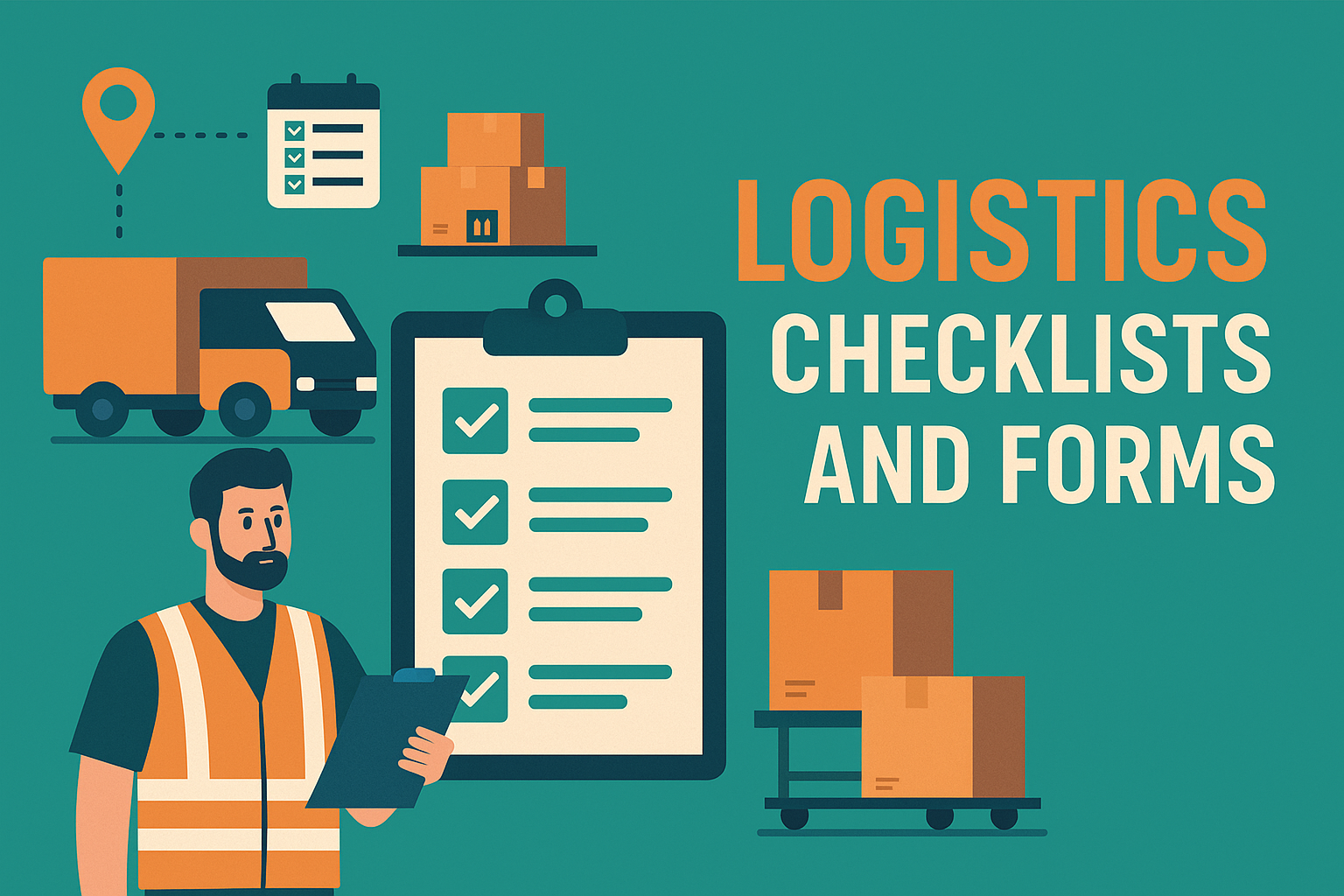
10 Essential Checklists and Forms for Logistics Safety & Compliance
In the logistics industry, safety, compliance, and operational efficiency rely on accurate documentation and regular inspections. Using logistics checklists and forms ensures that processes are standardised, risks are minimised, and compliance obligations are met. Below are ten essential checklists and forms every logistics organisation should implement.
- Daily vehicle and loader inspections for safety assurance
- Secure cargo handling and documentation for compliance
- Comprehensive warehouse and dock safety audits
- Hazard communication and electrical safety protocols
- Transport journey logs for tracking and accountability
- Daily Vehicle Inspection Checklist
- Loading/Unloading Documentation
- Transport Journey Log
- Cargo Securing Checklist
- Loader Pre-Operation Checklist
- Warehouse Safety Audit
- Loading Dock Safety Checklist
- Electrical Safety Checklist
- Hazard Communication Checklist
- Incident Report Form
- Typical Checklist Elements
- Going Digital with Checklists
- Conclusion
1. Daily Vehicle Inspection Checklist
Documents checks for mechanical soundness, fluid levels, brakes, tyres, and overall safety before trips. Helps prevent breakdowns and ensures vehicles meet compliance standards.
2. Loading/Unloading Documentation
Verifies cargo quantities, weight, condition, and delivery certificates. Essential for compliance, dispute resolution, and operational tracking.
3. Transport Journey Log
Maintains a detailed record of trips, deliveries made, and breakdowns. Supports operational tracking, compliance reporting, and driver accountability.
4. Cargo Securing Checklist
Ensures loading and securing of goods meets regulatory requirements and road safety standards. Minimises cargo movement risks during transit. Learn more about Chain of Responsibility requirements.
5. Loader Pre-Operation Checklist
Confirms loaders are inspected for mechanical safety, operator certification, and control function checks before use.
6. Warehouse Safety Audit
Verifies fire safety measures, hazardous material labelling, signage, and employee safety protocols. Ensures warehouse compliance with WHS requirements.
7. Loading Dock Safety Checklist
Documents compliance with dock safety standards. Covers equipment handling, risk management, and hazard identification to reduce incidents at loading docks.
8. Electrical Safety Checklist
Ensures all electrical systems, wiring, and equipment meet safety standards to prevent workplace injuries and electrical hazards.
9. Hazard Communication Checklist
Confirms correct labelling, signage, and safe storage of hazardous materials throughout warehouses and transport processes. See also OSHA Hazard Communication guidelines.
10. Incident Report Form
Captures details of workplace incidents, near misses, or accidents. Supports root cause analysis, compliance reporting, and corrective action tracking.
Typical Checklist Elements
- Inspection of vehicle or loader condition and safety features
- Verification of operator certification and training
- Recording of work hours, routes, and cargo status
- Certification of safe loading and unloading practices
- Warehouse safety audits and hazard communication protocols
Going Digital with Logistics Checklists and Forms
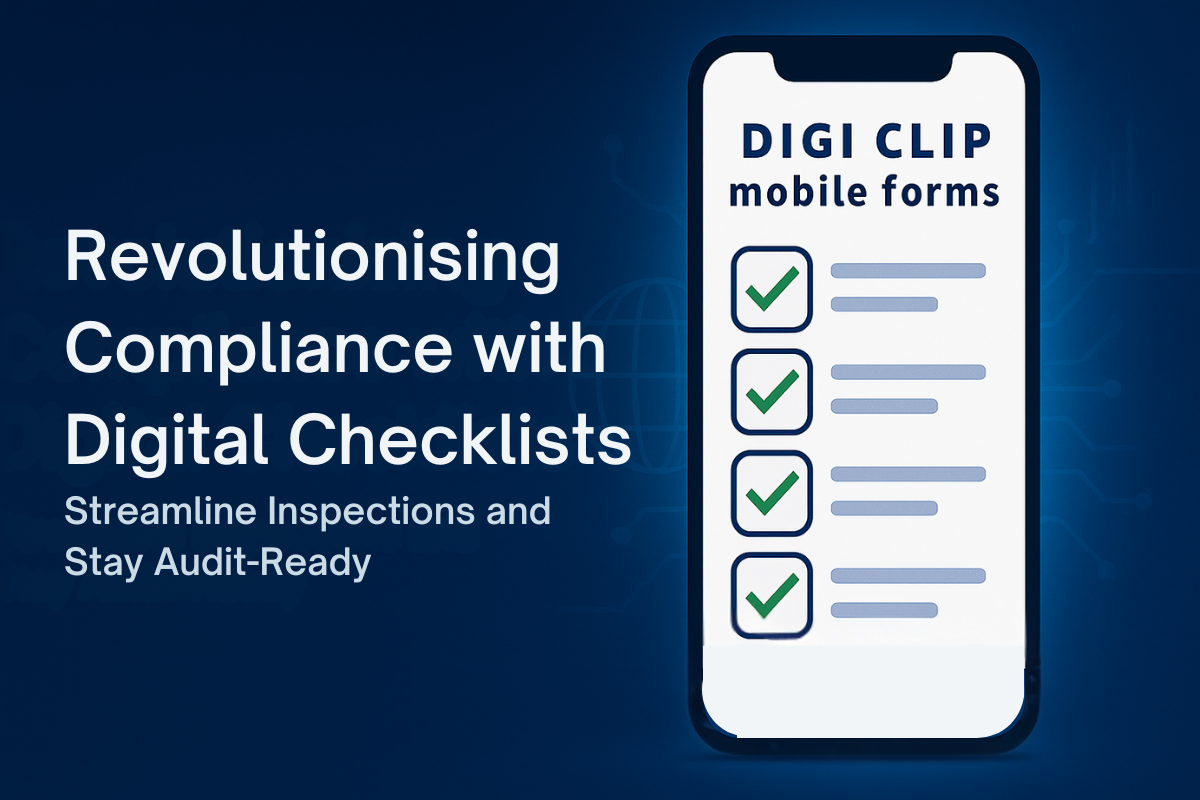
Traditional paper checklists are prone to errors, delays, and data loss. By adopting digital inspection tools like DIGI CLIP, logistics teams can:
- Capture evidence with photos, geo-time stamps, and signatures in real time
- Generate automated alerts and corrective actions when issues arise
- Access cloud-based dashboards for audit-ready reporting
- Integrate safety, compliance, and operations into one streamlined platform
About DIGI CLIP Mobile Forms
DIGI CLIP is a mobile checklist and inspection app that simplifies safety, compliance, and operational reporting. Designed for industries like transport, warehousing, agriculture, and construction, DIGI CLIP replaces paper forms with real-time digital checklists. Built-in photo capture, automated alerts, geo-time stamping, and an Action Register ensure nothing gets missed.
Why Try DIGI CLIP?
Because safety actions don’t count if you can’t prove them. Start your free trial—no credit card needed—and see how simple compliance can be.
Conclusion
Implementing these ten essential logistics checklists—and enhancing them with digital tools—creates a safer, more compliant, and efficient operation. From daily vehicle inspections to hazard communication, each checklist plays a critical role in reducing risk and ensuring regulatory compliance across the supply chain. By going digital, organisations gain real-time visibility, faster close-outs of corrective actions, and audit-ready data, making compliance easier to prove and maintain. DIGI CLIP mobile forms provide the evidence-based reporting needed to meet WHS, Chain of Responsibility, and global compliance obligations. Start today and experience how streamlined, digital workflows can transform your logistics operations.
FAQs
Why are daily vehicle inspections important?
They ensure vehicles are safe and compliant before trips, preventing breakdowns and accidents while maintaining regulatory compliance.
What is the purpose of a transport journey log?
It records trips, deliveries, and breakdowns, providing accountability and valuable data for compliance and operational efficiency.
How do warehouse safety audits help?
They verify compliance with WHS requirements, ensuring fire safety, signage, hazardous material storage, and employee protocols are followed.
What is hazard communication compliance?
It ensures correct labelling, signage, and safe storage of hazardous materials across warehouses and transport processes.
How does DIGI CLIP improve checklist management?
DIGI CLIP digitises inspections and checklists, enabling real-time reporting, photo evidence, automated alerts, and secure compliance records.
If you liked this post? Why not share it!




Leave A Comment